Foreclosure Recovery Specialists, LLC
Recover Funds That May
Rightfully Belong To You
Many homeowners are unaware they may be entitled to surplus funds
after foreclosure. Foreclosure Recovery Specialists helps identify,
verify, and recover funds that may be available.
Supporting recovery efforts in non-judicial states. No cost for the initial consultation.
Supporting recovery efforts in non-judicial states. No cost for the initial consultation.
Foreclosure Recovery Specialists, LLC
Recover Funds That May
Rightfully Belong To You
Many homeowners are unaware they may be entitled to surplus funds after foreclosure. Foreclosure Recovery Specialists helps identify, verify, and recover funds that may be available.
Supporting recovery efforts in non-judicial states. No cost for the initial consultation.

Experienced Recovery Support
Several years of combined experience assisting individuals through surplus fund recovery processes.

Personalized Claim Assistance
Every situation is reviewed individually — no automated intake, no one-size-fits-all handling

Documentation Guidance
We help you gather, organize, and prepare the paperwork commonly requested by agencies.

Professional Communication
We follow up with the appropriate offices and keep you informed at each stage.
Experienced Recovery Support
Several years of combined experience assisting individuals through surplus fund recovery processes.
Personalized Claim Assistance
Every situation is reviewed individually — no automated intake, no one-size-fits-all handling
Documentation Guidance
We help you gather, organize, and prepare the paperwork commonly requested by agencies.
Professional Communication
We follow up with the appropriate offices and keep you informed at each stage.
The Overlooked Reality
Many Former Homeowners Never
Know These Funds Exist
After a foreclosure sale, a property may sell for more than the amount owed on
the mortgage,taxes, fees, and costs of sale. When that happens, the remaining balance
does not automatically disappear — it may belong to the former property owner.
Notices Get Missed
Mail is often sent to the foreclosed address long after the owner has moved.
Deadlines Apply
Many jurisdictions place time limits on when a surplus claim can be filed
Records Are Scattered
Sale results and fund balances sit across county, trustee, and agency records
The Overlooked Reality
Many Former Homeowners Never
Know These Funds Exist
After a foreclosure sale, a property may sell for more than the amount owed on the mortgage,taxes, fees, and costs of sale. When that happens, the remaining balance does not automatically disappear — it may belong to the former property owner.
Notices Get Missed
Mail is often sent to the foreclosed address long after the owner has moved.
Deadlines Apply
Many jurisdictions place time limits on when a surplus claim can be filed
Records Are Scattered
Sale results and fund balances sit across county, trustee, and agency records
Education
What Are Foreclosure Surplus Funds?
Surplus funds — sometimes called excess proceeds or overbid funds — are the dollars left over when a foreclosed property sells at auction for more than the total debt and allowable costs.
How they occur
Competitive bidding, rising property values, or a low remaining loan
balance can push a sale price above what is owed.
Why homeowners may not know
Notification practices vary widely by state and county, and letters
are frequently sent to an address the owner no longer occupies.
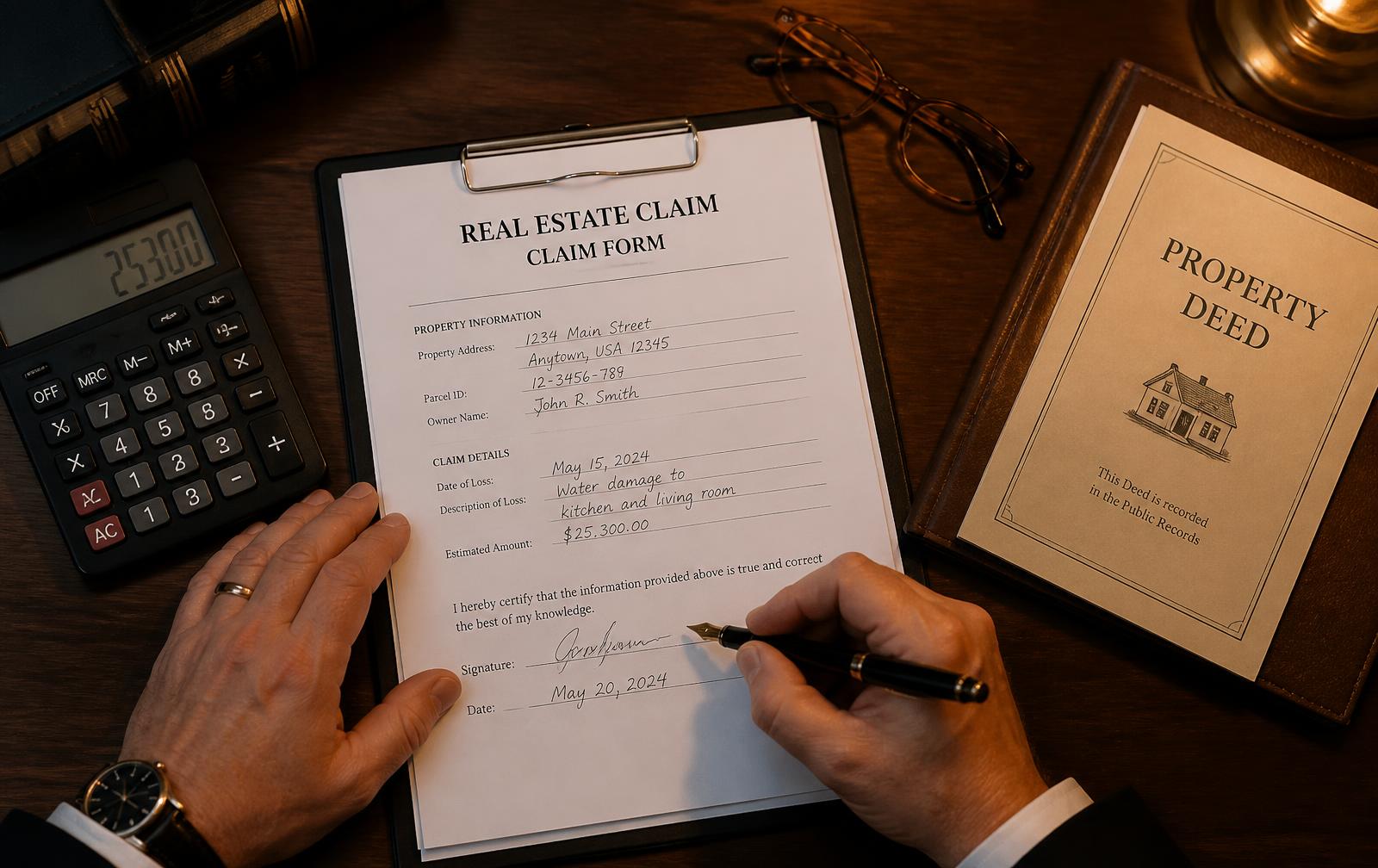
Why professional assistance helps
Claim requirements, proof standards, and filing windows differ by
jurisdiction. Small documentation errors can delay or derail a claim.
Important
Availability and eligibility vary by state, county, and individual case. Nothing on this page is a guarantee of funds or outcome.
Education
What Are Foreclosure Surplus
Funds?
Surplus funds — sometimes called excess proceeds or overbid funds — are the dollars left over when a foreclosed property sells at auction for more than the total debt and allowable costs.
How they occur
Competitive bidding, rising property values, or a low remaining loan balance can push a sale price above what is owed.
Why homeowners may not know
Notification practices vary widely by state and county, and letters are frequently sent to an address the owner no longer occupies.
Why professional assistance helps
Claim requirements, proof standards, and filing windows differ by jurisdiction. Small documentation errors can delay or derail a claim.
Important
Availability and eligibility vary by state, county, and individual case. Nothing on this page is a guarantee of funds or outcome.
How We Help
Full Support Across Every Stage Of
Recovery
From the first record search to the final disbursement, we handle the work that stalls most self-filed claims.

Fund Identification
We research public records and sale results to determine whether surplus funds may be associated with your former property

Eligibility Review
We review ownership history, liens, and claim priority to help clarify whether you may be an eligible claimant.

Documentation Support
Identification, proof of ownership, affidavits, and supporting records — organized and reviewed before submission.

Claim Preparation
Claim packages are prepared to match the format and requirements of the receiving agency.

Agency Communication
We correspond with trustees, county offices, and holding agencies so you are not left chasing status updates.

Recovery Assistance
We track the claim through review and disbursement and address requests for additional information.
How We Help
Full Support Across Every Stage Of
Recovery
From the first record search to the final disbursement, we handle the work that stalls most self-filed claims.
Fund Identification
We research public records and sale results to determine whether surplus funds may be associated with your former property
Eligibility Review
We review ownership history, liens, and claim priority to help clarify whether you may be an eligible claimant.
Documentation Support
Identification, proof of ownership, affidavits, and supporting records — organized and reviewed before submission.
Claim Preparation
Claim packages are prepared to match the format and requirements of the receiving agency.
Agency Communication
We correspond with trustees, county offices, and holding agencies so you are not left chasing status updates.
Recovery Assistance
We track the claim through review and disbursement and address requests for additional information.
Our Recovery Process
A Clear, Six-Step Path Forward
You always know where your claim stands and what happens next.
01
Initial Consultation
A no-cost conversation to understand your property, the foreclosure, and your goals.
02
Review Property Information
We examine ownership records, sale details, and the parties involved in the foreclosure.
03
Verify Available Funds
We confirm with the holding office whether surplus funds appear to be associated with the sale.
04
Prepare Required Documents
We assemble identification, ownership proof, and any affidavits the agency requires.
05
Submit Recovery Claim
The completed claim package is filed with the appropriate agency and logged for follow-up.
06
Complete Recovery Process
We monitor review, respond to requests, and stay engaged through disbursement.
Our Recovery Process
A Clear, Six-Step Path
Forward
You always know where your claim stands and what happens next.
01
Initial Consultation
A no-cost conversation to understand your property, the foreclosure, and your goals.
02
Review Property Information
We examine ownership records, sale details, and the parties involved in the foreclosure.
03
Verify Available Funds
We confirm with the holding office whether surplus funds appear to be associated with the sale.
04
Prepare Required Documents
We assemble identification, ownership proof, and any affidavits the agency requires.
05
Submit Recovery Claim
The completed claim package is filed with the appropriate agency and logged for follow-up.
06
Complete Recovery Process
We monitor review, respond to requests, and stay engaged through disbursement.
Our Recovery Process
A Clear, Six-Step Path
Forward
You always know where your claim stands and what happens next.
01
Initial Consultation
A no-cost conversation to understand your property, the foreclosure, and your goals.
02
Review Property Information
We examine ownership records, sale details, and the parties involved in the foreclosure.
03
Verify Available Funds
We confirm with the holding office whether surplus funds appear to be associated with the sale.
04
Prepare Required Documents
We assemble identification, ownership proof, and any affidavits the agency requires.
05
Submit Recovery Claim
The completed claim package is filed with the appropriate agency and logged for follow-up.
06
Complete Recovery Process
We monitor review, respond to requests, and stay engaged through disbursement.
Why Choose Us
Why Choose Foreclosure Recovery
Specialists
Recovery work rewards patience, accuracy, and persistence. That is exactly how we operate.

Dedicated Support
One point of contact who knows your file from first call to final outcome.

Clear Communication
Plain-language updates without jargon, pressure, or unrealistic promises.

Personalized Approach
Claims are handled around your circumstances, timeline, and documentation.

Process Experience
Familiarity with the administrative steps agencies expect in non-judicial states.

Client-Focused Service
Responsive follow-up and honest guidance about what to expect at each stage.
Why Choose Us
Why Choose Foreclosure
Recovery Specialists
Recovery work rewards patience, accuracy, and persistence. That is exactly how we operate.
Dedicated Support
One point of contact who knows your file from first call to final outcome.
Clear Communication
Plain-language updates without jargon, pressure, or unrealistic promises.
Personalized Approach
Claims are handled around your circumstances, timeline, and documentation.
Process Experience
Familiarity with the administrative steps agencies expect in non-judicial states.
Client-Focused Service
Responsive follow-up and honest guidance about what to expect at each stage.

About The Company
Built To Help People Reclaim What Was Left Behind
Foreclosure Recovery Specialists, LLC works with individuals to help recover funds that may be owed after bank or tax lien foreclosure.
Our work covers locating available funds, verifying eligibility, preparing documentation, communicating with the appropriate agencies, and managing the recovery process from start to finish. We bring several years of combined experience helping individuals recover funds.
About The Company
Built To Help People Reclaim What Was Left Behind
Foreclosure Recovery Specialists, LLC works with individuals to help recover funds that may be owed after bank or tax lien foreclosure.
Our work covers locating available funds, verifying eligibility, preparing documentation, communicating with the appropriate agencies, and managing the recovery process from start to finish. We bring several years of combined experience helping individuals recover funds.
Where We Work
A Focus On Non-Judicial States
Foreclosure Recovery Specialists, LLC works with individuals to help recover funds that may be owed after bank or tax lien foreclosure.
Our work covers locating available funds, verifying eligibility, preparing documentation, communicating with the appropriate agencies, and managing the recovery process from start to finish. We bring several years of combined experience helping individuals recover funds.

Simplified Statutory Procedures
Recovery steps are typically defined by statute rather than case-by-case rulings.
Fewer Court Filings
Many claims are handled administratively instead of through prolonged litigation.
Standardized Processes
Foreclosure sales tend to follow consistent, repeatable formats.
Administrative Claim Handling
Claims are often submitted directly to a trustee or county office.
Where We Work
A Focus On Non-Judicial States
Foreclosure Recovery Specialists, LLC works with individuals to help recover funds that may be owed after bank or tax lien foreclosure.
Our work covers locating available funds, verifying eligibility, preparing documentation, communicating with the appropriate agencies, and managing the recovery process from start to finish. We bring several years of combined experience helping individuals recover funds.
Simplified Statutory Procedures
Recovery steps are typically defined by statute rather than case-by-case rulings.
Fewer Court Filings
Many claims are handled administratively instead of through prolonged litigation.
Standardized Processes
Foreclosure sales tend to follow consistent, repeatable formats.
Administrative Claim Handling
Claims are often submitted directly to a trustee or county office.
Client Experiences
What Clients Say About Working With Us
Illustrative client experiences. Individual results
and eligibility vary.

"I had no idea funds could still be connected to a home I lost years ago. The team explained the process, told me exactly what to send, and handled the back-and-forth with the county."
D. Whitfield
Former homeowner, Arizona
"What stood out was how straightforward they were. No promises, just a clear explanation of what they could check and how long it might take."
M. Alvarez
Former homeowner, Georgia
"Paperwork has always overwhelmed me. Having someone organize the documents and follow up on my behalf made the whole thing manageable."
R. Boone
Former homeowner, Texas
Client Experiences
What Clients Say About Working With Us
Illustrative client experiences. Individual results
and eligibility vary.
"I had no idea funds could still be connected to a home I lost years ago. The team explained the process, told me exactly what to send, and handled the back-and-forth with the county."
D. Whitfield
Former homeowner, Arizona
"What stood out was how straightforward they were. No promises, just a clear explanation of what they could check and how long it might take."
M. Alvarez
Former homeowner, Georgia
"Paperwork has always overwhelmed me. Having someone organize the documents and follow up on my behalf made the whole thing manageable."
R. Boone
Former homeowner, Texas
Common Questions
Answers Before You Ever Pick Up The Phone
A few of the questions we hear most often. Our full FAQ covers eligibility, timelines, documents, and state differences.
What are foreclosure surplus funds?
When a foreclosed property sells for more than the total amount owed on the debt, fees, and costs, the remaining balance is often referred to as surplus or excess funds. Those remaining funds may belong to the former property owner or another party with a valid claim.
How do I know if I qualify?
Eligibility generally depends on ownership history at the time of sale, the sale price relative to the amounts owed, and whether other lienholders have priority claims. We review these details during your consultation and verify what we can with the holding agency.
How does the process work?
We begin with a consultation, review your property information, verify whether funds appear to be available, prepare the required documentation, submit the claim, and follow the process through to completion.
What information do I need?
Typically a government-issued ID, information about the property address and foreclosure sale, and any records you kept regarding ownership. We tell you exactly what the specific agency requires.
Common Questions
Answers Before You Ever Pick
Up The Phone
A few of the questions we hear most often. Our full FAQ covers eligibility, timelines, documents, and state differences.
What are foreclosure surplus funds?
When a foreclosed property sells for more than the total amount owed on the debt, fees, and costs, the remaining balance is often referred to as surplus or excess funds. Those remaining funds may belong to the former property owner or another party with a valid claim.
How do I know if I qualify?
Eligibility generally depends on ownership history at the time of sale, the sale price relative to the amounts owed, and whether other lienholders have priority claims. We review these details during your consultation and verify what we can with the holding agency.
How does the process work?
We begin with a consultation, review your property information, verify whether funds appear to be available, prepare the required documentation, submit the claim, and follow the process through to completion.
What information do I need?
Typically a government-issued ID, information about the property address and foreclosure sale, and any records you kept regarding ownership. We tell you exactly what the specific agency requires.